OTR & Agricultural Tyre Orbitread Line
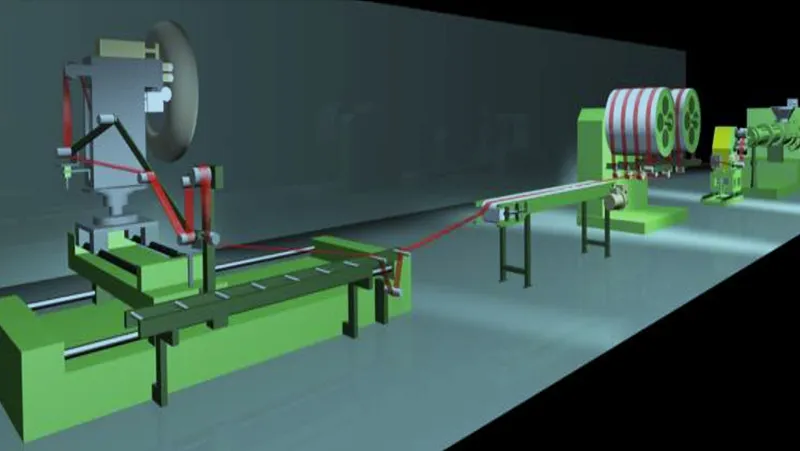
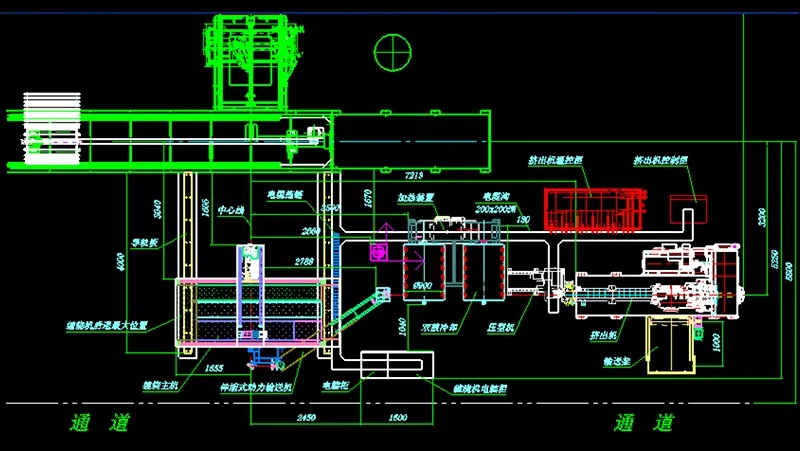
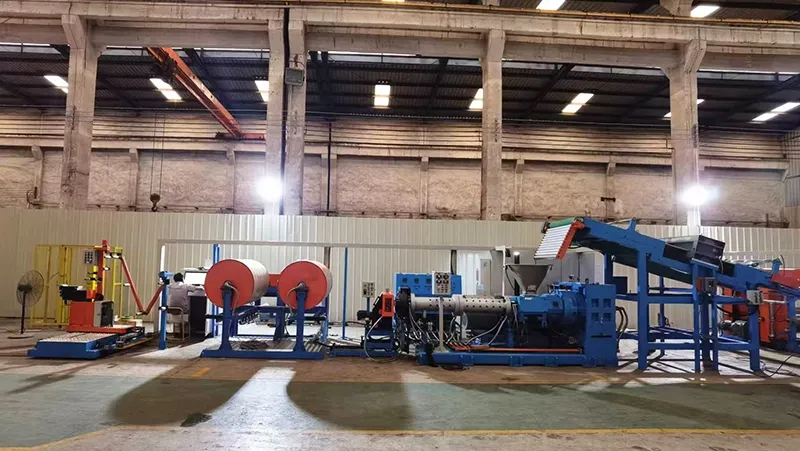
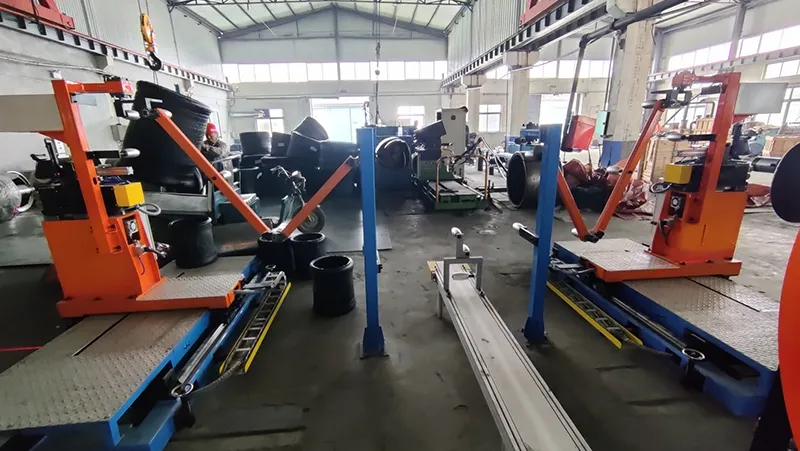
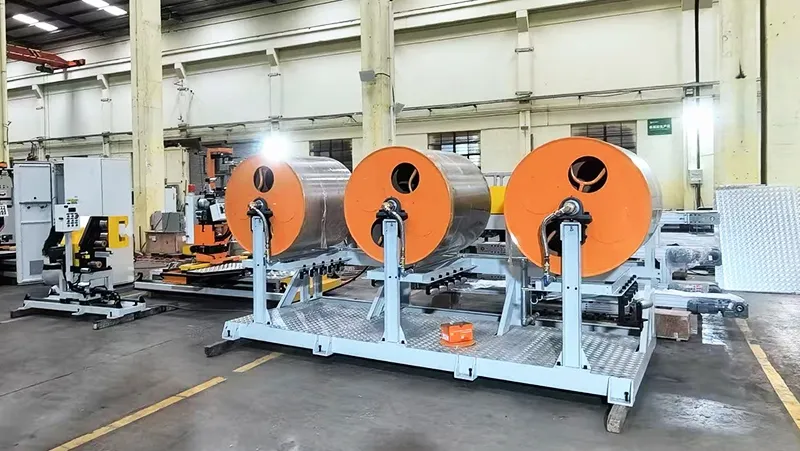
OTR and agricultural tyre tread winding lines are used to build tyre tread structures by automatically winding extruded rubber strips onto OTR and agricultural tyre carcasses. Processes such as extrusion, cooling, strip winding, and compaction are carried out in sequence to create a more uniform tread profile with accurate dimensions and fewer internal air pockets.
Technical Specifications
| Max. Winding Width | 4000 mm (customizable) |
| Max. Winding Thickness | 200 mm |
| Max. Line Speed | 80 m/min |
| Max. Winding Layers | 10 |
| Max. Rotation Angle of Winding Head | 150° |
| Max. Winding Weight Variation | ±1.5% |
| Max. Winding Position Deviation | ±1 mm |
Main Components
- Cold Feed Extruder
The cold feed extruder is responsible for the initial processing of the rubber compound before winding. It has a pin-type screw structure that improves plasticization uniformity and provides a stable rubber strip output. - Cooling Unit
After the extrusion process, the rubber strip is cooled by a dual-drum labyrinth type cooling system, which lowers its temperature below 70°C to help maintain dimensional stability and prevent deformation. - Strip Winding Unit
The winding unit applies the rubber strip onto the tyre carcass according to preset winding paths. It's equipped with a PLC and industrial computer control system, which enables closed-loop operation and improves winding accuracy and consistency. - Control System
The control system uses PID technology to monitor and adjust rubber strip width and winding thickness in real time, with dimensional accuracy controlled within ±2%.